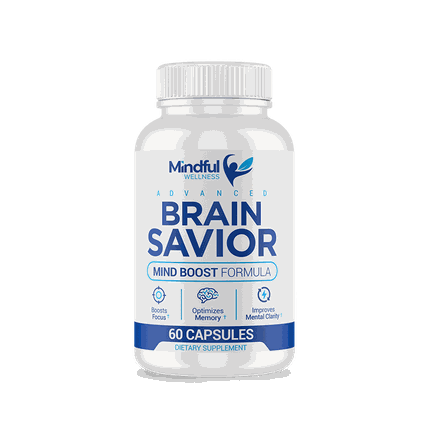
How Brain Savior fits into ordinary memory changes after 50
Forgetting where you parked is not the same thing as forgetting how to drive. The National Institute on Aging draws that line clearly: occasional lapses, slower recall of names and a longer search for the right word are common with age, while disorientation and repeated inability to manage familiar tasks are not, and belong in a doctor's office rather than a supplement conversation[3]. Brain Savior is built for the first category. It is a daily nutritional supplement, not a treatment, and the honest framing matters because the alternative framing is what gets supplement companies in trouble.
The everyday version of the problem looks like this. You walk into the kitchen and the reason evaporates. A colleague's name sits one shelf too high to reach. Around 3pm the mental picture goes grey and the second half of the workday costs twice what the first half did. Those are the complaints that show up again and again in our review inbox, and they are the ones the formula was assembled around.
Why the formula pulls from three different directions
Single-ingredient thinking is tempting and usually disappointing. Brain Savior instead covers three mechanisms that are known to interact. The first is raw material: citicoline is a choline donor, and choline is what the body uses to build phosphatidylcholine, a structural component of every neuronal membrane, along with acetylcholine, the neurotransmitter most associated with memory formation[1]. Most American adults fall short of the adequate intake for choline, which makes it an unglamorous but sensible place to start. The B vitamins sit alongside it because B6, folate and B12 run the one-carbon cycle that keeps homocysteine in check, and a B12 shortfall is one of the genuinely reversible causes of memory complaints in older adults[4].
The second direction is circulation and oxidative defense. Brain tissue is roughly two percent of body weight and consumes about twenty percent of the oxygen you breathe, so anything that touches blood flow touches cognition. Ginkgo biloba is the most studied botanical in this space; the National Center for Complementary and Integrative Health is measured about it, noting that evidence for preventing cognitive decline in healthy adults is not established, and flagging its interaction with blood thinners[2]. We repeat that caution rather than hide it. Maritime pine bark and phosphatidylserine round out this group.
The third direction is the one people underestimate: load management. Bacopa monnieri, Rhodiola rosea and L-theanine are there for the kind of attention that does not come with a caffeine spike and a 4pm crash. Bacopa in particular is a slow ingredient. Trials that report an effect generally run eight to twelve weeks, which is exactly why the guarantee here is 180 days rather than 30. A money-back window shorter than the ingredient timeline is a marketing decision, not a confidence signal.
Why Brain Savior runs through one authorized portal instead of retail
Supplements are regulated as food, not as drugs, which means nobody pre-approves them and the burden of quality sits with whoever makes and sells them[5]. In a retail chain a bottle passes through a distributor, a wholesaler, sometimes a liquidator, and by the time it reaches a shelf nobody can tell you which lot it came from or how long it sat in a hot warehouse. Marketplace listings are worse: the same product page can be filled by several sellers, and counterfeit versions of popular cognitive formulas are routinely reported.
Running distribution through a single authorized portal solves a narrow but important problem. There is one lot in circulation at a time. There is one Certificate of Analysis attached to it. The refund window starts at delivery, from a shipment we can trace, rather than from a receipt we have never seen. If a bottle of Brain Savior reaches you from anywhere except this portal, we cannot document it, we cannot vouch for how it was stored, and the 180-day promise does not travel with it. That is the trade: less convenience, a chain of custody you can actually check on the verification page.
This page is written for general education. It is not medical advice and it does not replace a conversation with your own doctor or pharmacist, especially if you take prescription medication or manage a diagnosed condition.